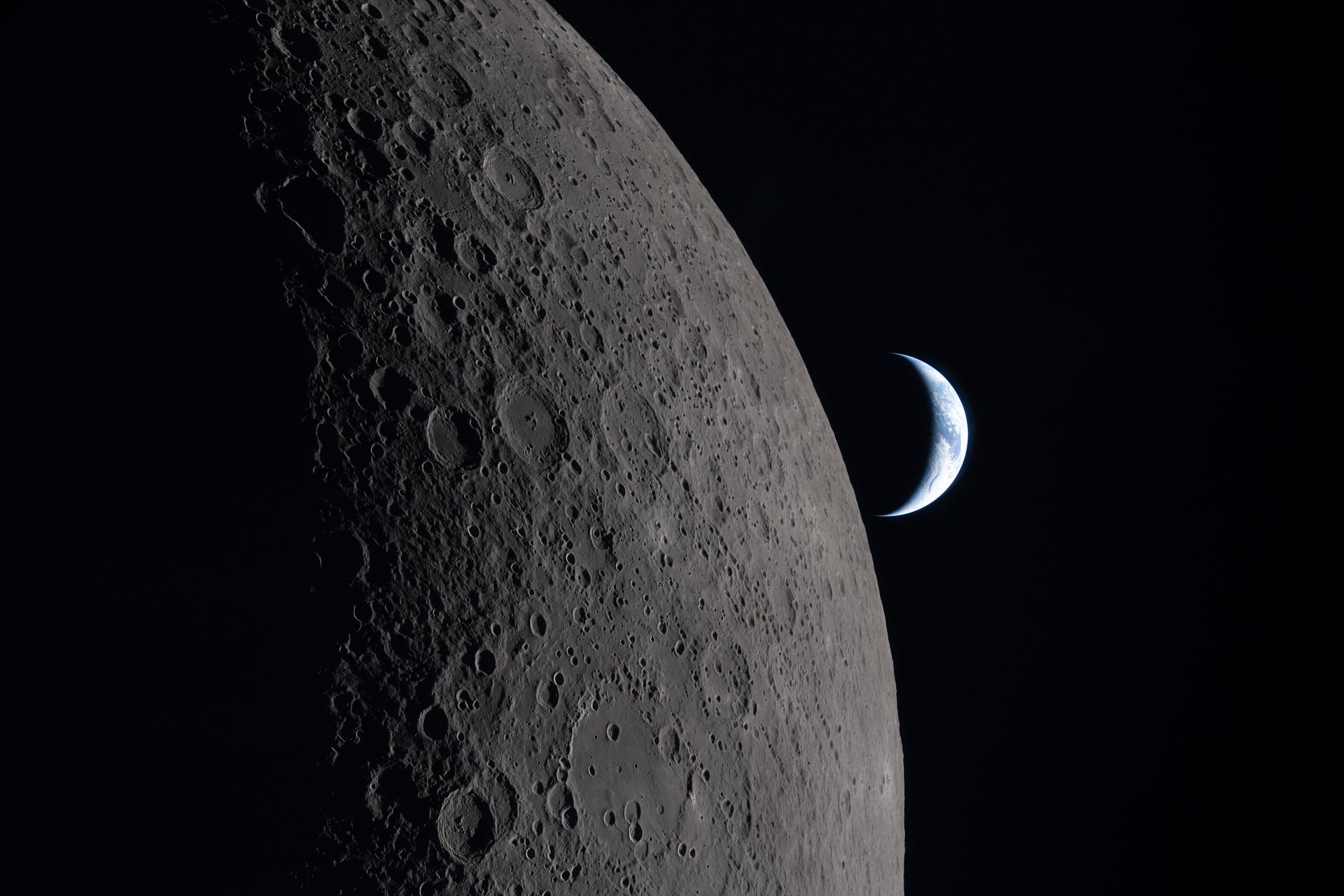
At 8:07 pm EDT on April 10th, 2026, the Artemis II crew safely splashed down in the Pacific Ocean. A live audience of 27.3 million from US TV channels watched with wide-eyed anticipation, and more beyond. Over the course of their trip, the Artemis crew broke the record for furthest human space travel, photographed the far side of the moon, and named a newly created crater after commander Reid Wiseman’s late wife. It was a rare moment of public enthusiasm and pride, the kind that was last felt during the Apollo Lunar exploration program.
Following Artemis II’s return, I spoke with one viewer here at Brown who has a unique relationship with NASA’s lunar exploration programs. Before joining the Brown faculty in 1973, Professor James Head was a key member of the NASA Apollo program. He helped plan the Apollo Lunar traverses, train the astronauts, and debrief with them on their return. I sat down with him to have a conversation about the past, present and future of space exploration.
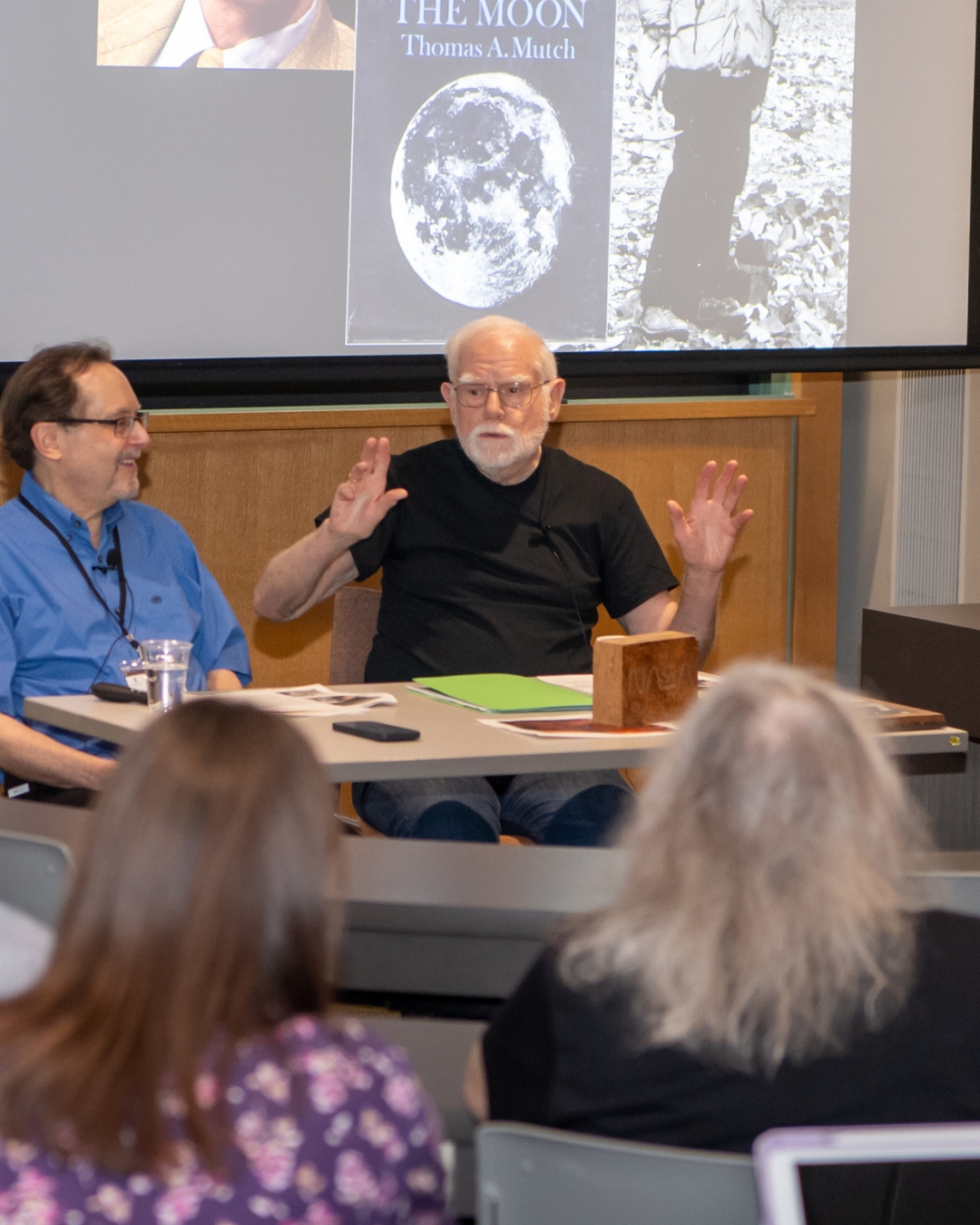 “At dinner with my Russian colleagues, I used to always toast to Sputnik 1 for paying for my education.” Professor Head says, reflecting on the impact the space race had on mobilizing STEM education in the US. He describes the Apollo program as a magnet for STEM careers, sparking widespread interest and innovation in the sciences, and shuns the idea that the program was all just “flags and footprints,” saying that “it just sends me into cardiac arrest because it is so untrue!”
After the moon landing, the discussion at NASA was focused around scientific return. I ask him about how the scientific impact of Artemis may differ from Apollo. Professor Head describes how the increased diversity in STEM fields today means that the Artemis mission has an opportunity to do even better fundamental science than Apollo. “We had very few women, the workforce was mostly male and white at the time, and look what we did,” he elaborates. “I challenge my students that we should be able to do a 100% better because we have all this diversity today.”
We discussed the surrounding socio-cultural forces that impacted space exploration in the ‘60’s, and continue to do so today. “During the week I was planning lunar traverse, over the weekends I was protesting the war with 100,000 of my closest friends down at the Mall.” Recalling his regular travel between Washington D.C. and Cape Kennedy, he says if he had frequent flyer miles back then, he could probably fly to Pluto first class and return, no problem.
Ultimately, the final 3 Apollo missions were cancelled. While Nixon cited budget constraints, Professor Head suspects the reasons were mostly political, saying, “The money was still being spent, it just went to Vietnam.” Critics of space travel today point out that resources should be diverted from exploration of other planets to fixing problems on our own. Professor Head points out that the money being diverted from NASA would not go towards climate change in the current administration. Citing the hefty budget cuts to NASA this year, he describes the success of Artemis II as a bittersweet moment in space exploration.
50 years after Apollo, NASA has restarted lunar exploration. This time, James Head is involved in different ways. For example, he is working with a group of roughly 10 Brown University undergraduate students from across different departments to plan a 500 day Design Reference Mission to the polar regions of the moon. The team is tackling a range of problems; from habitat construction to agriculture and waste management.
There are more of Professor Head’s former students who are involved in Artemis, and space exploration, and he takes every opportunity to share their achievements. “Here, this is one of my treasures,” he says as he shows me a photo of four of his students working on Artemis II mission operations. After our meeting, we attended the department’s Spring 2026 Thomas A. Mutch Lecture featuring Dr. Louise Prockter, the Planetary Science Division Director at NASA, who is also one of Professor Head’s former PhD students. It is clear that Professor Head’s impact on NASA’s lunar program has only grown more comprehensive in his time at Brown.
Lunar exploration is an essential way of learning about the development of the Earth. On the importance of planetary science, Professor Head says that “The first 20 pages of the Earth’s history are missing. Going to the moon reveals our planet’s childhood.” Furthermore, Jim Head emphasizes that space exploration encourages humanity to think about a larger purpose. “It makes us look up.”