2026 Summer Undergraduate Research Highlights
From the local water quality of Narragansett Bay to river-dune interactions on Titan, DEEPS undergraduate students participated in a variety of cutting edge research projects during their 2026 summer break. We're proud to showcase their research and experiences.
“I am using satellite remote sensing to study river-dune interactions in the Namib Desert as a terrestrial analog for Titan and NASA's Dragonfly mission. I enjoyed expanding into planetary science and was amazed that one of Earth's oldest deserts can help us understand Saturn's largest moon.”

“I am using elevation data from Fiji to study the impacts of sea level rise and how it affects hospitals at different flood heights. I was excited to learn how to use ArcGIS Pro for analysis and found the process of applying the data interesting.”

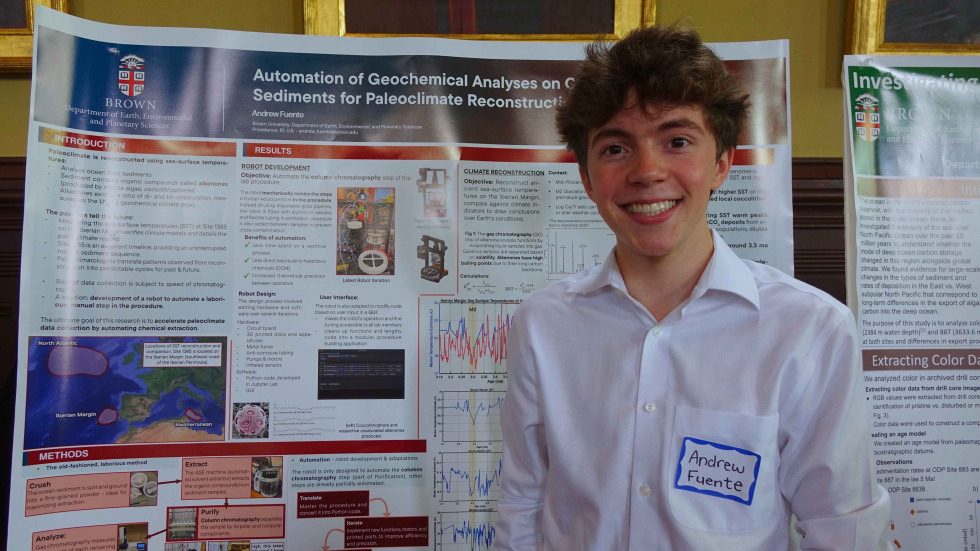
Andrew Fuente | Poster Presentation: “Automation of Geochemical Analyses on Ocean Sediments for Paleoclimate Reconstruction” Advisor: Timothy Herbert
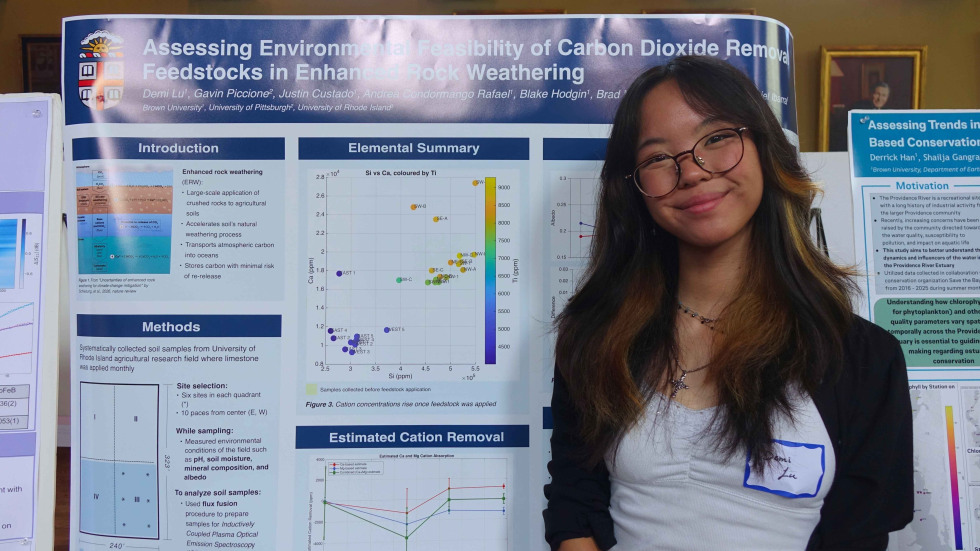
Demi Lu | Poster Presentation: “Assessing Contamination Potential of Carbon Dioxide Removal Feedstocks in Enhanced Rock Weathering” Advisor: Daniel Ibarra and Ronald Aubert (Public Health)
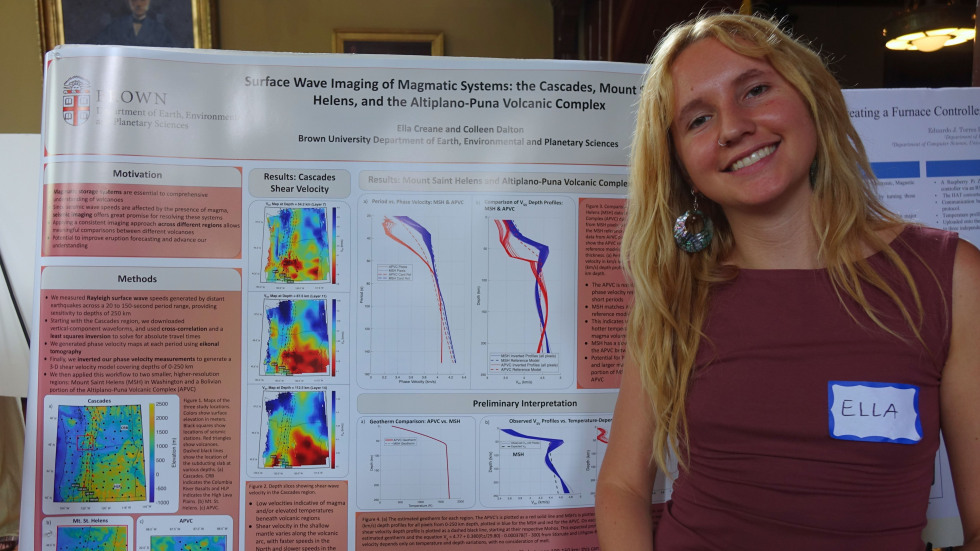
Ella Creane | Poster Presentation: “Surface Wave Imaging of Magmatic Systems: the Cascades, Mount Saint Helens, and the Altiplano-Puna Volcanic Complex” Advisor: Colleen Dalton
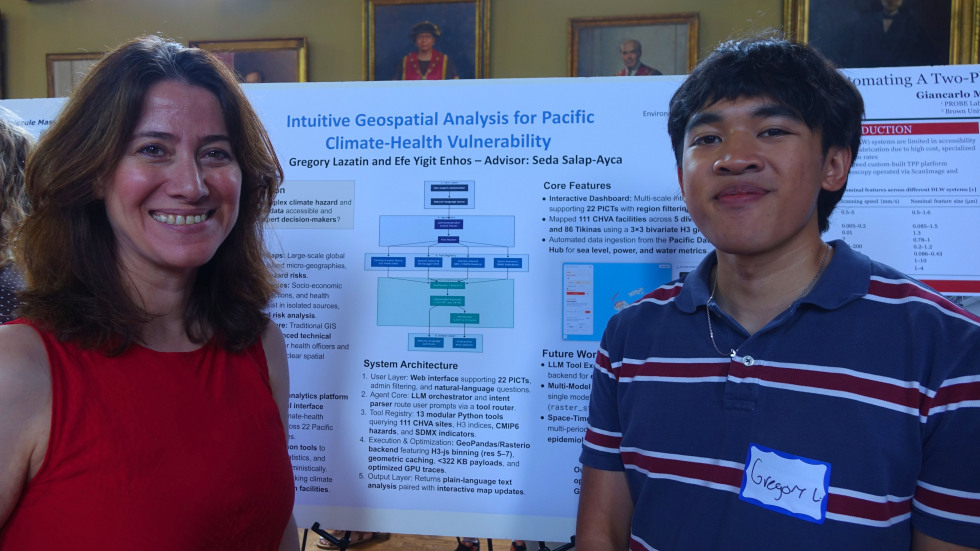
Gregory Lazatin | Poster Presentation: “Spatially-Aware Climate Risk Visualization & Decision-Support Chatbot for Pacific Island Countries and Territories” Advisor: Seda Salap-Ayca
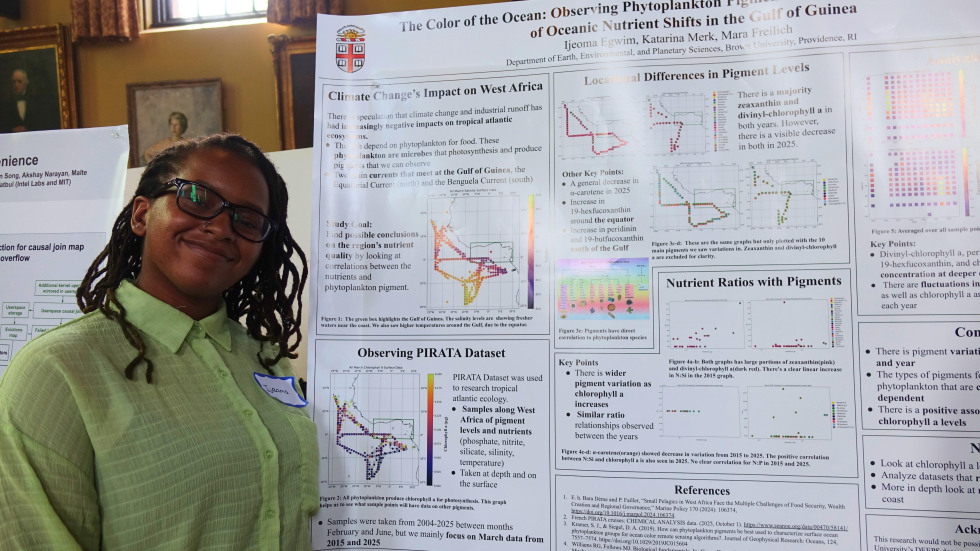
Ijeoma Egwim | Poster Presentation: “The Color of the Ocean: Observing Phytoplankton Pigment Emissions to Find Causes of Oceanic Nutrient Shifts in the Gulf of Guinea” Visiting from UMBC; Advisor: Mara Freilich
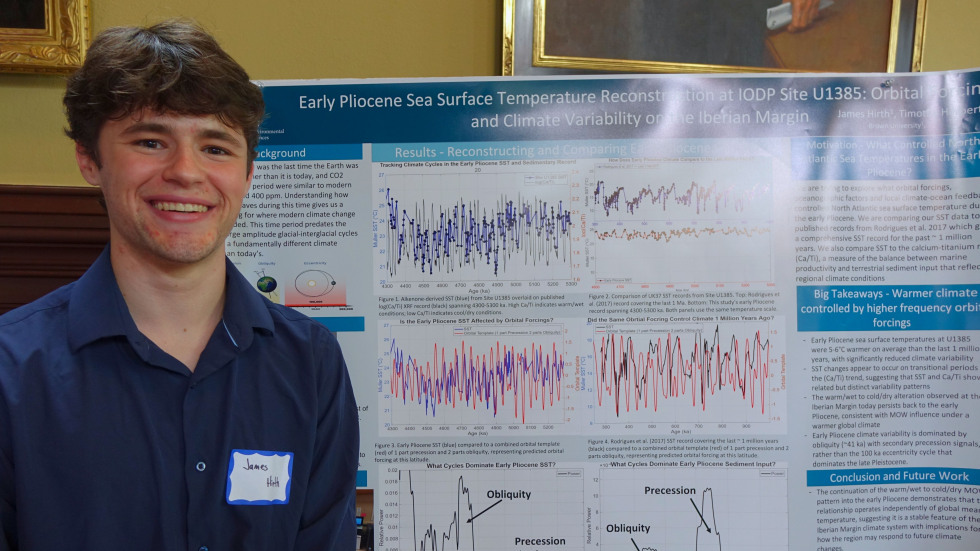
James Hirth | Poster Presentation: “Early Pliocene Sea Surface Temperature Reconstruction at IODP Site U1385” Advisor: Timothy Herbert
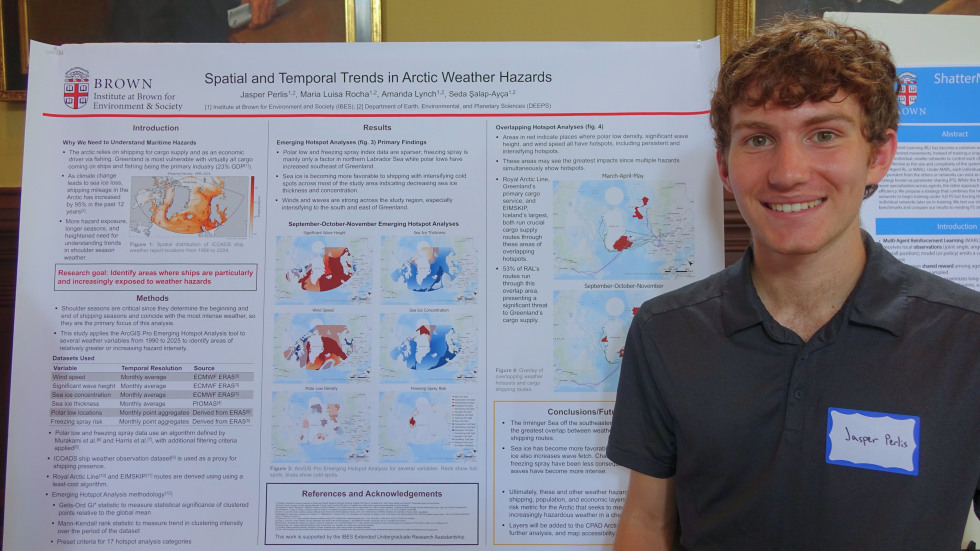
Jasper Perlis | Poster Presentation: “Spatial and Temporal Trends in Arctic Weather Hazards” Advisor: Amanda Lynch
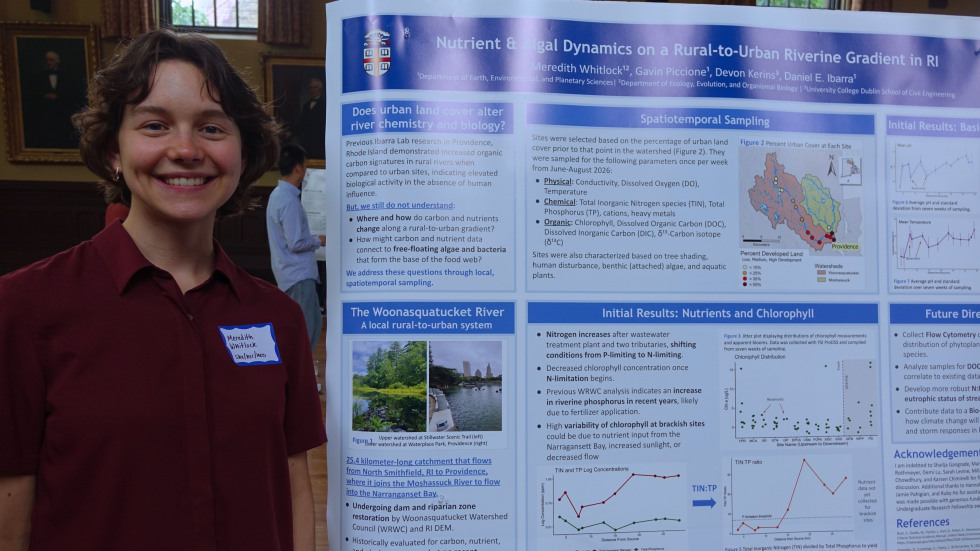
Meredith Whitlock | Poster Presentation: “Nutrient Fluxes and Algal Dynamics along a Rural-to-Urban Gradient on the Woonasquatucket River” Advisor: Dan Ibarra
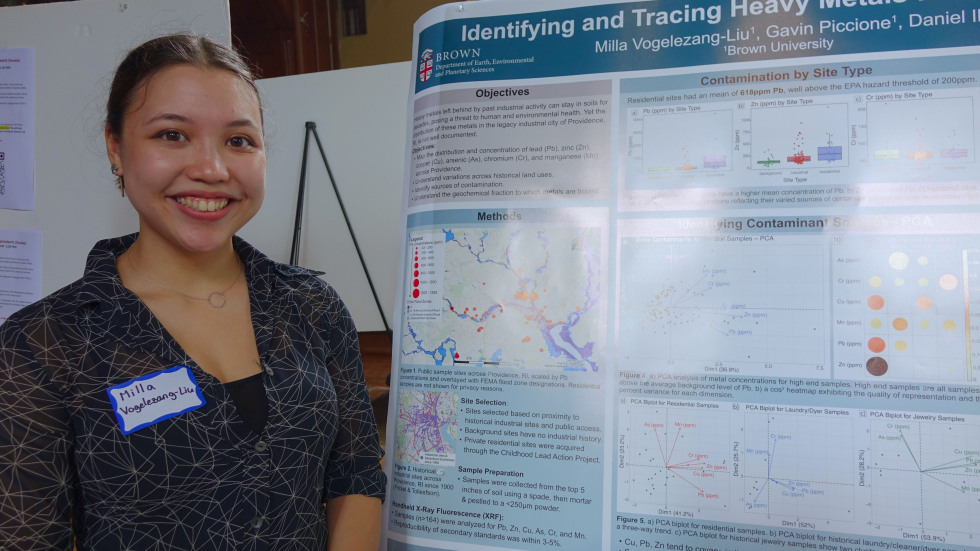
Milla Vogelezang-Liu | Poster Presentation: “Identifying and Tracing Heavy Metals in Providence Soils” Advisor: Dan Ibarra
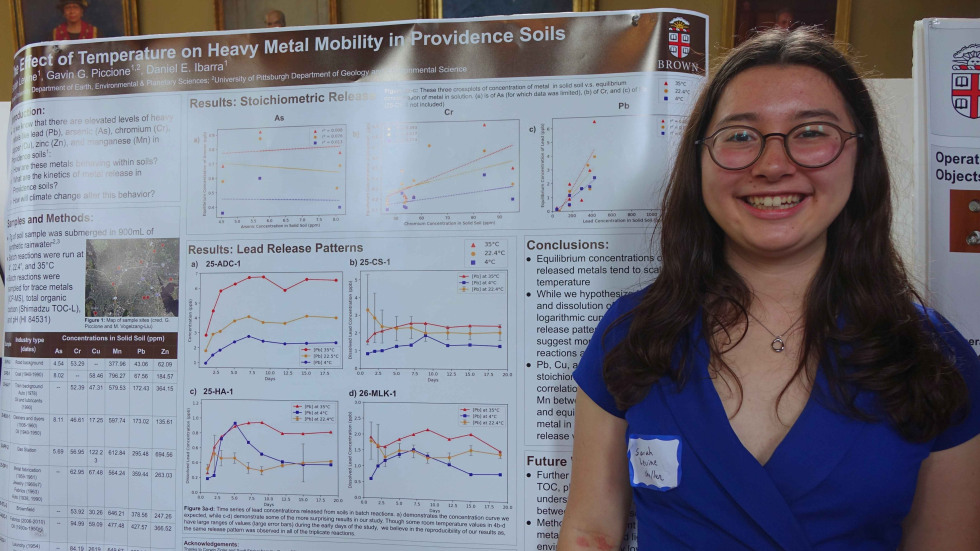
Sarah Levine | Poster Presentation: “The Effect of Temperature on Heavy Metal Mobility in Providence Soils” Advisors: Daniel Ibarra and Gavin Piccione
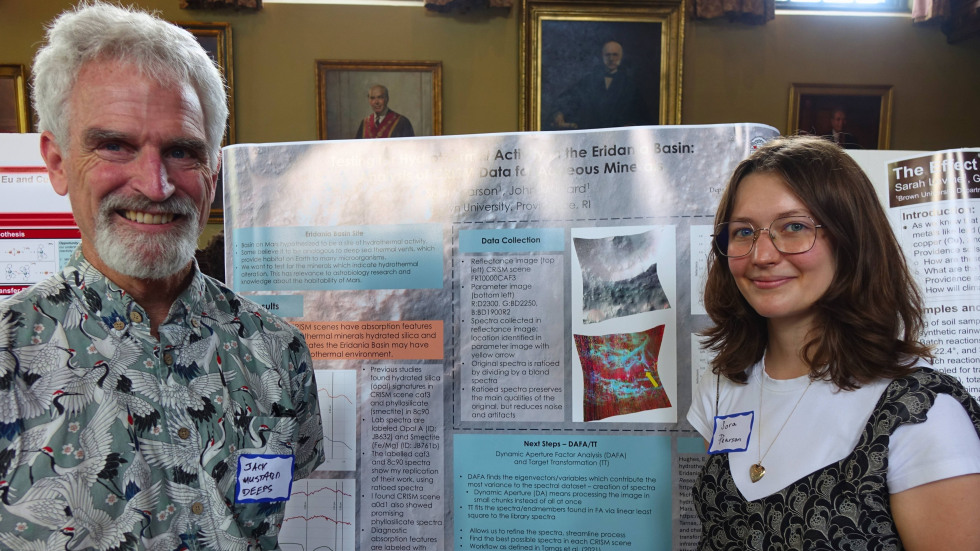
Sora Pearson | Poster Presentation: “Testing for Hydrothermal Activity in the Eridania Basin: Analysis of CRISM Data for Aqueous Minerals” Advisor: John Mustard
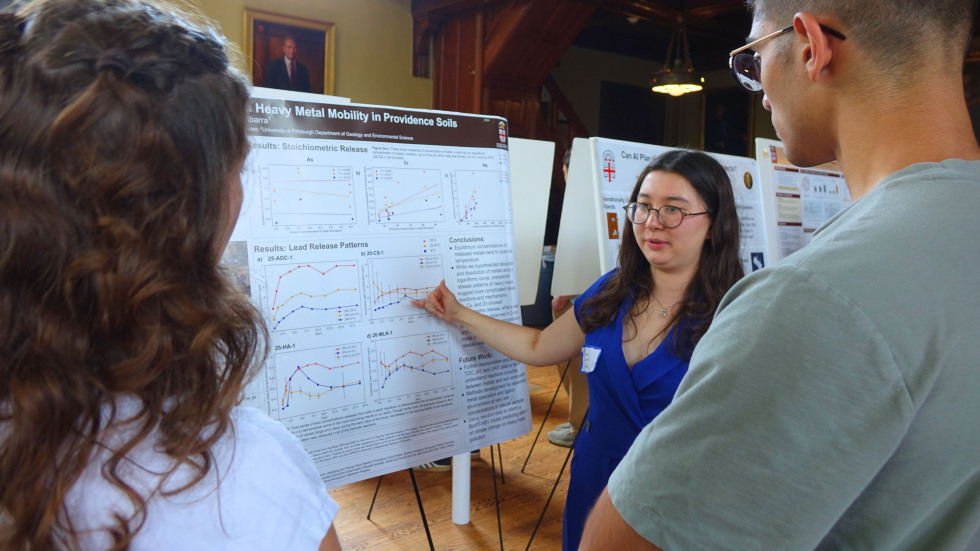
Sarah Levine | Poster Presentation: “The Effect of Temperature on Heavy Metal Mobility in Providence Soils” Advisors: Daniel Ibarra and Gavin Piccione
Breathe Providence
Breathe Providence is a project monitoring concentrations of carbon monoxide (CO), carbon dioxide (CO₂), nitrogen oxides (NOₓ), ozone (O₃), and particulate matter (PM₂.₅), alongside meteorological conditions in Providence, RI. The project is lead by Professor Meredith Hastings, and works closely with community groups and government stakeholders to develop an unprecedented understanding of air quality across the city. This summer, four undergraduate researchers joined Breathe Providence for their summer research projects.
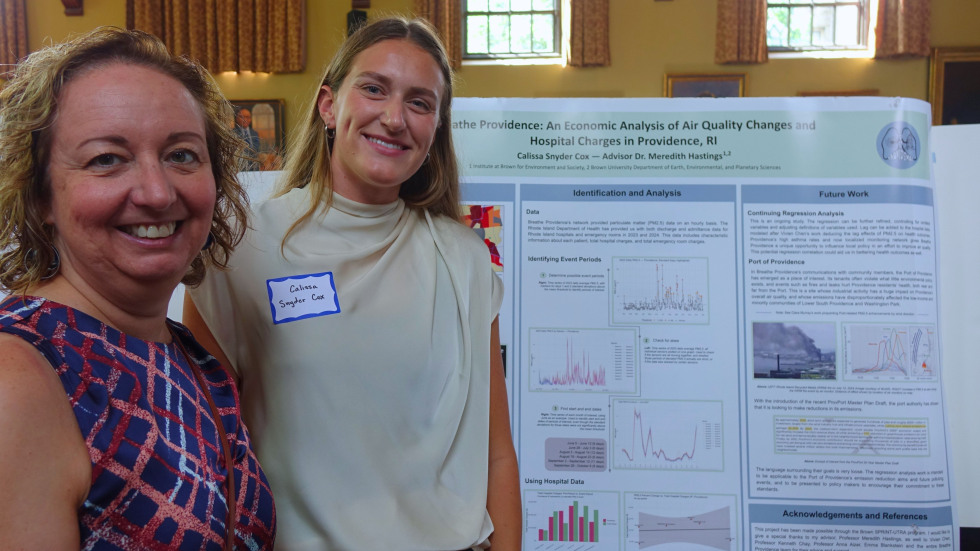
Calissa Snyder Cox | Poster Presentation: “Breathe Providence: An Economic Analysis of Air Quality Changes and Hospital Charges in Providence, RI” Advisor: Meredith Hastings
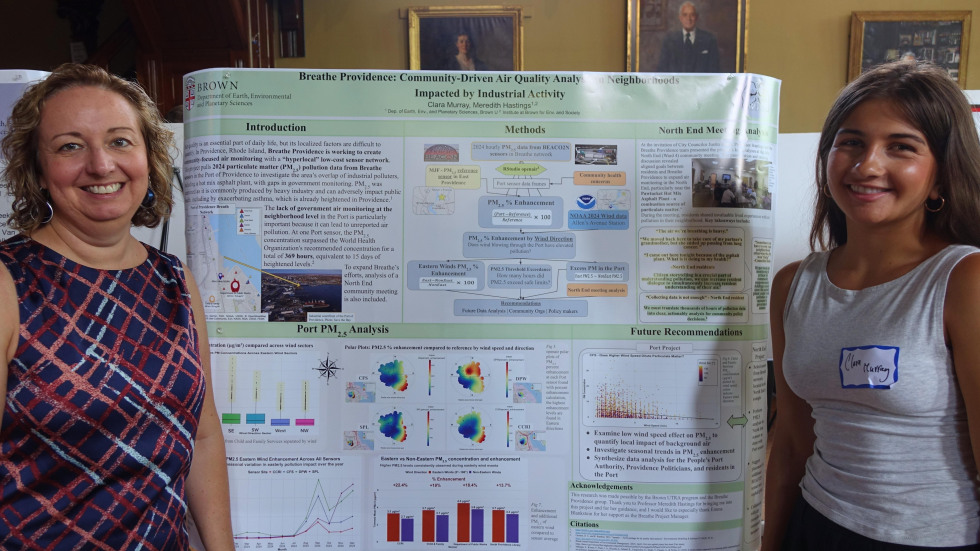
Clara Murray | Poster Presentation: “Breathe Providence: Community-Driven Air Quality Analysis in Neighborhoods Impacted by Industrial Activity” Advisor: Meredith Hastings
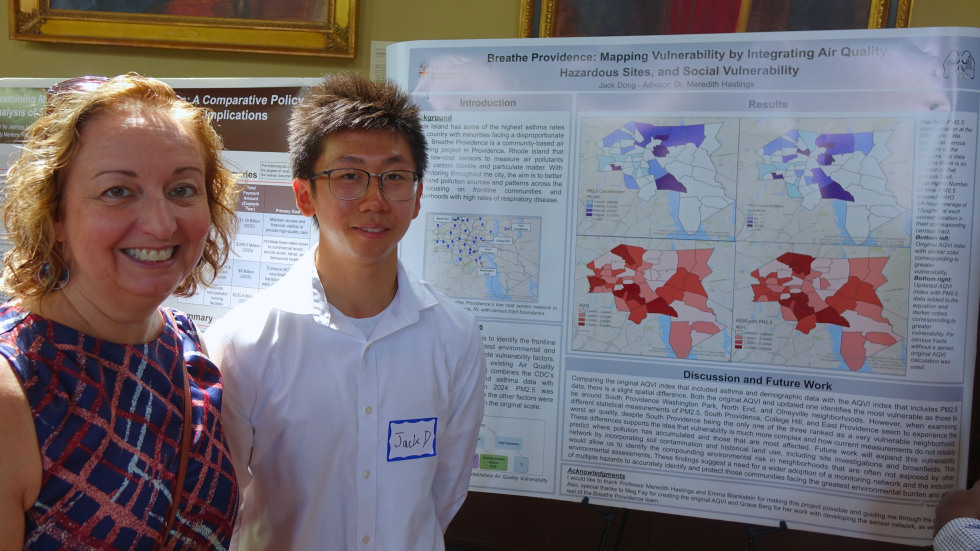
Jack Dong | Poster Presentation: “Breathe Providence: Mapping Vulnerability by Integrating Air Quality, Hazardous Sites, and Social Vulnerability” Advisor: Meredith Hastings
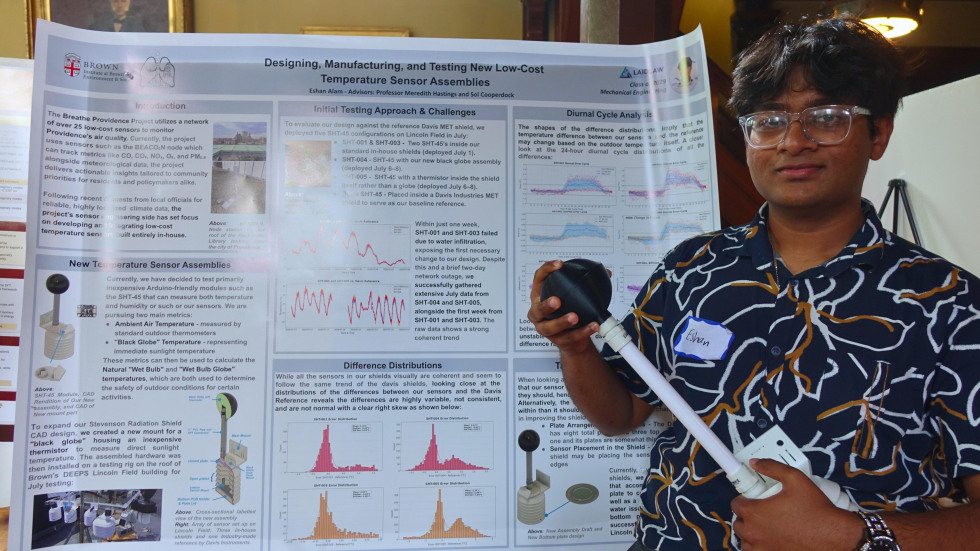
Eshan Alam | Poster Presentation: “Breathe Providence: Designing & Testing Low-cost Temperature Sensors Assemblies” Advisors: Meredith Hastings and Sol Cooperdock
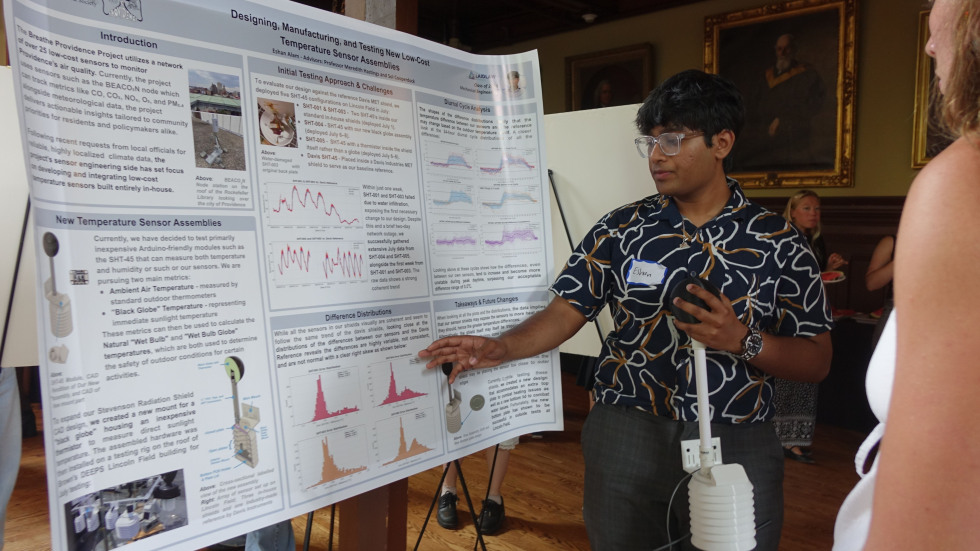
Eshan Alam | Poster Presentation: “Breathe Providence: Designing & Testing Low-cost Temperature Sensors Assemblies” Advisors: Meredith Hastings and Sol Cooperdock
Equitable Climate Information Working Group
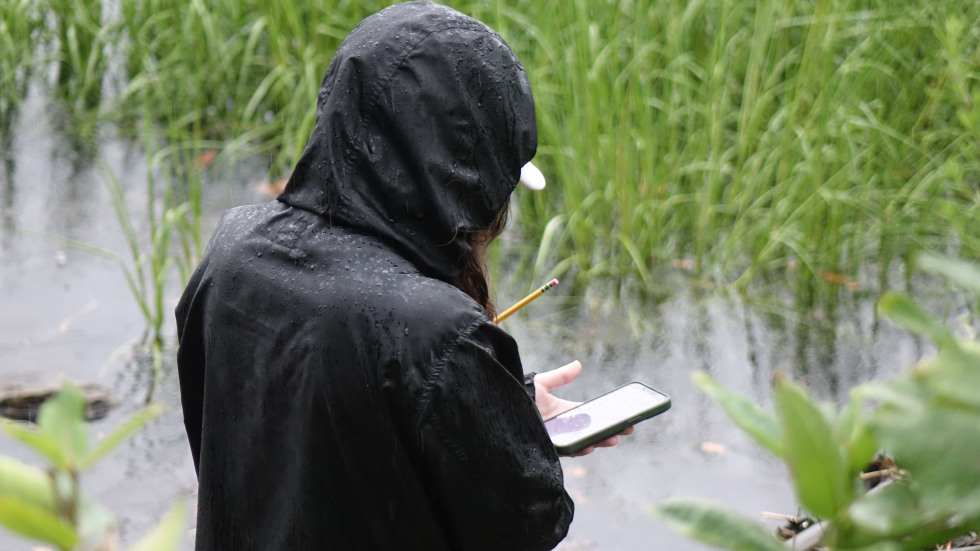
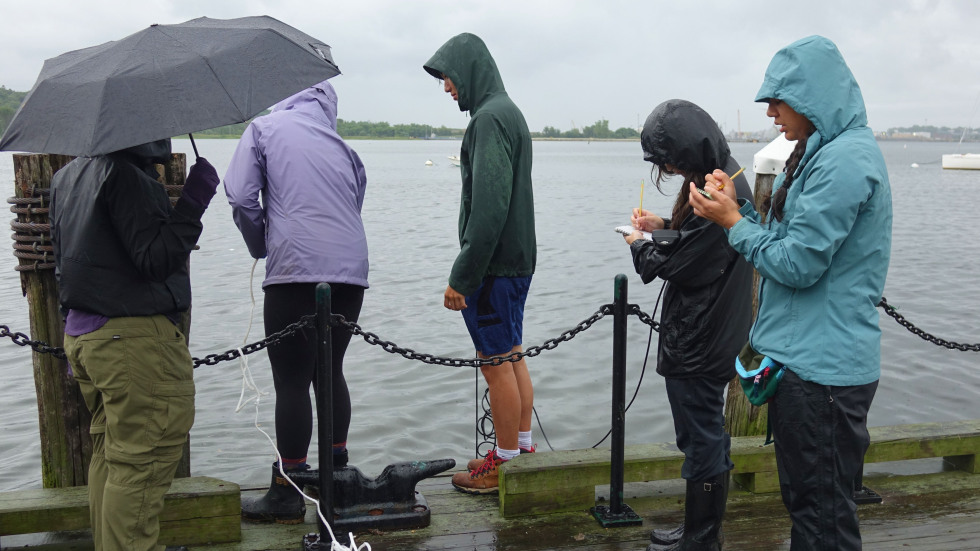
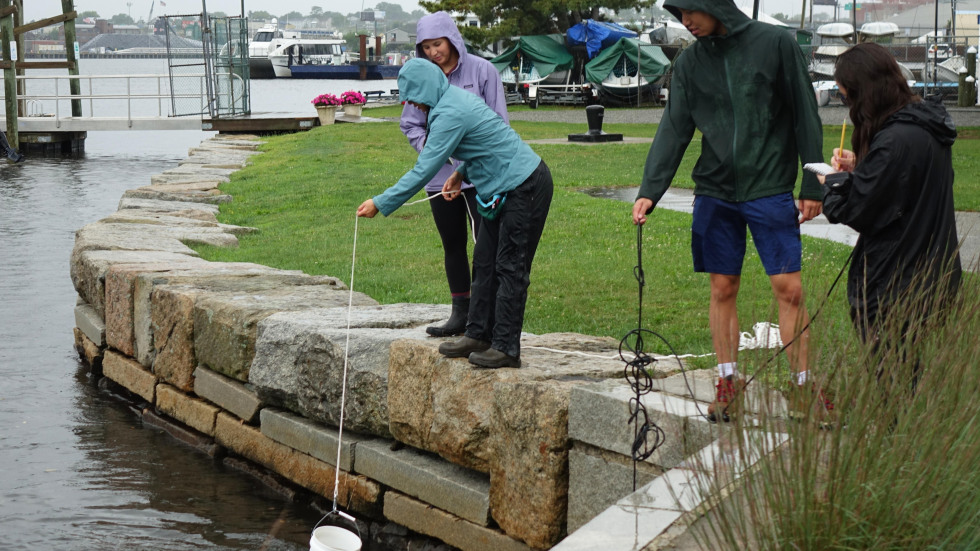
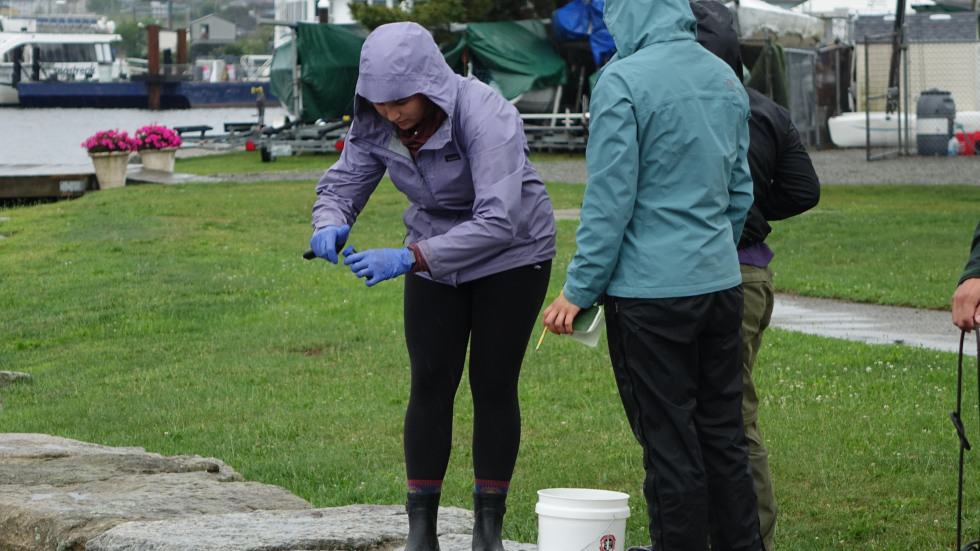
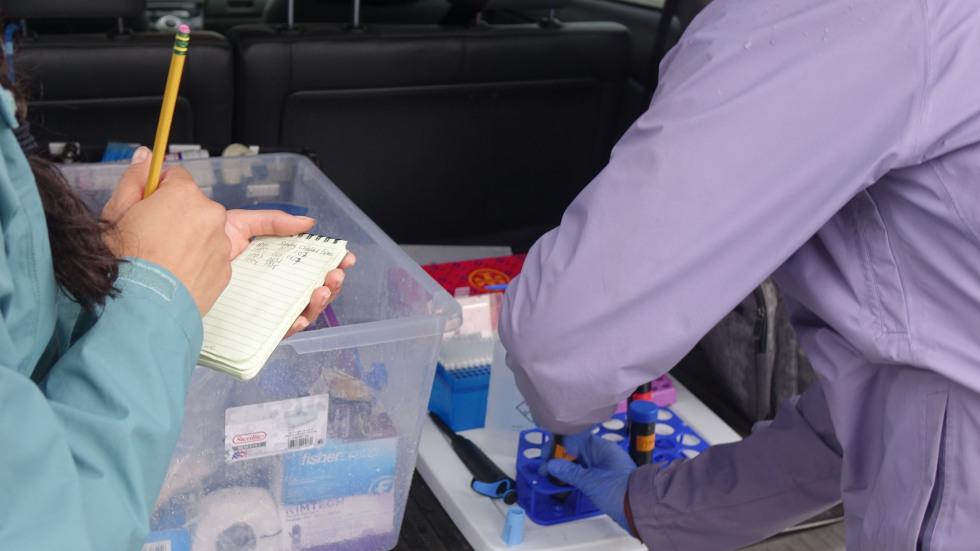
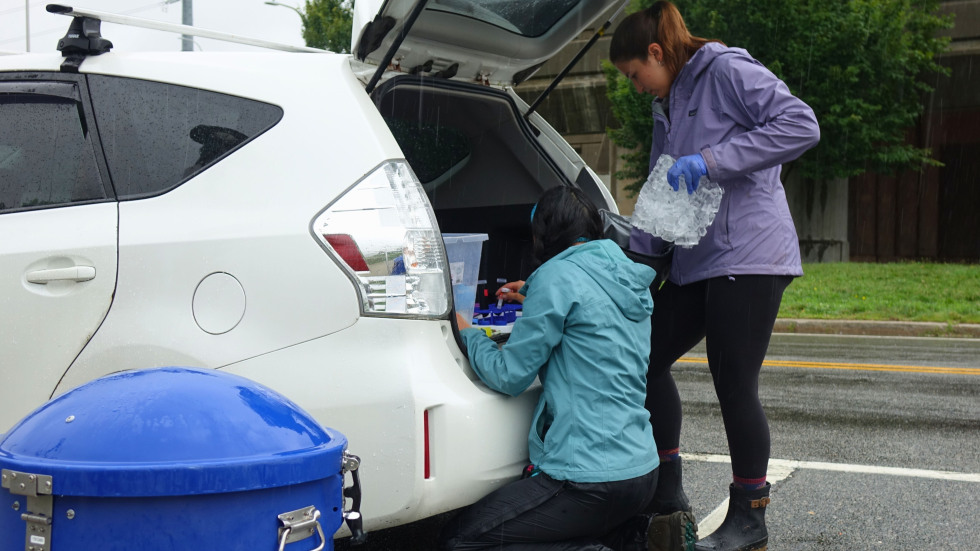
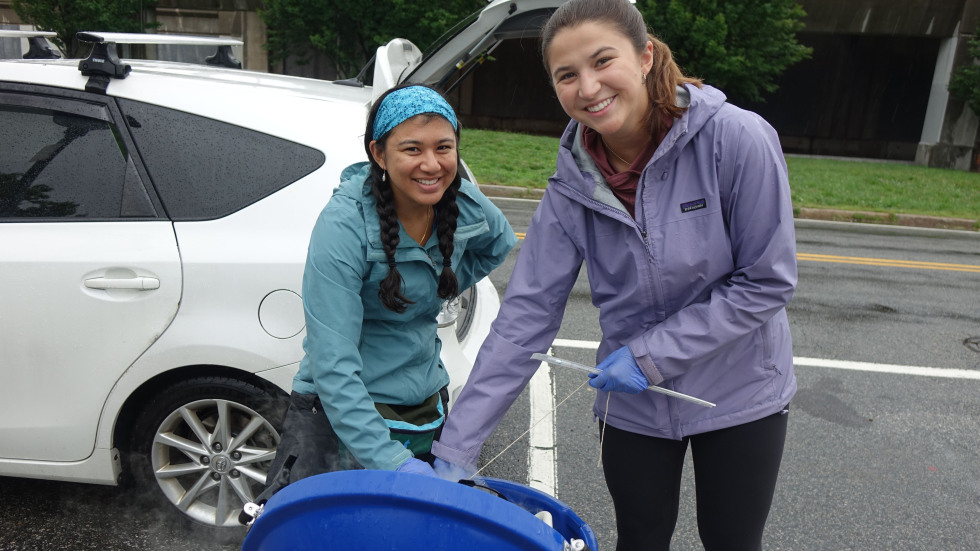
One group of students spent their summer investigating the water quality and supporting environmental research right here in Providence. Led by Shailja Gangrade, a Postdoctoral Research Associate with the Equitable Climate Futures initiative, five undergraduates helped to test the water quality along the public shoreline of Narragansett Bay.
“We are interested in the intersection between water, air, and soil quality – and what the implications of industrial contaminants are on the aquatic ecosystem of the upper Narragansett Bay," Gangrade explained. "We have conducted workshops through our WaterSpeak community science program, in which Providence residents have described seeing drastic changes –during their lifetimes– in odors, clarity, and fish availability of waters surrounding the Port of Providence and India Point Park."
Gargrade continued, “Many community members have found the unpleasant odors and the lack of crabs and fish to have transformed the places they once used to frequent for recreation. As Providence residents ourselves, we often share the sentiment of never wanting to swim in the waters surrounding our city. But what would make these waters swimmable? What does it take to improve water quality, such that abundant fish return? We hope our data can help provide some preliminary insights to these questions.”
“We particularly aim to provide information about what is in the water and what sorts of patterns arise in water chemistry and microbial composition, particularly after precipitation events. So far, we have detected anomalous biological conditions after high-precipitation events, and we have observed waters in the Providence River with known petrochemical contamination to have starkly distinct water chemistry than surrounding waters. This project has been incredibly rewarding already, as our measurements have been validating community member concerns and provide us with information that can influence environmental management, fishing, and public health policies.”
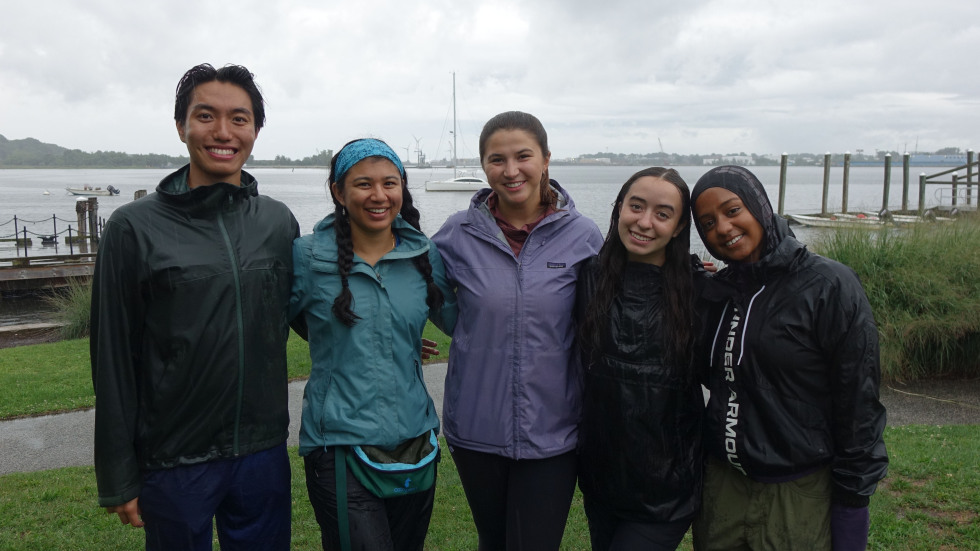
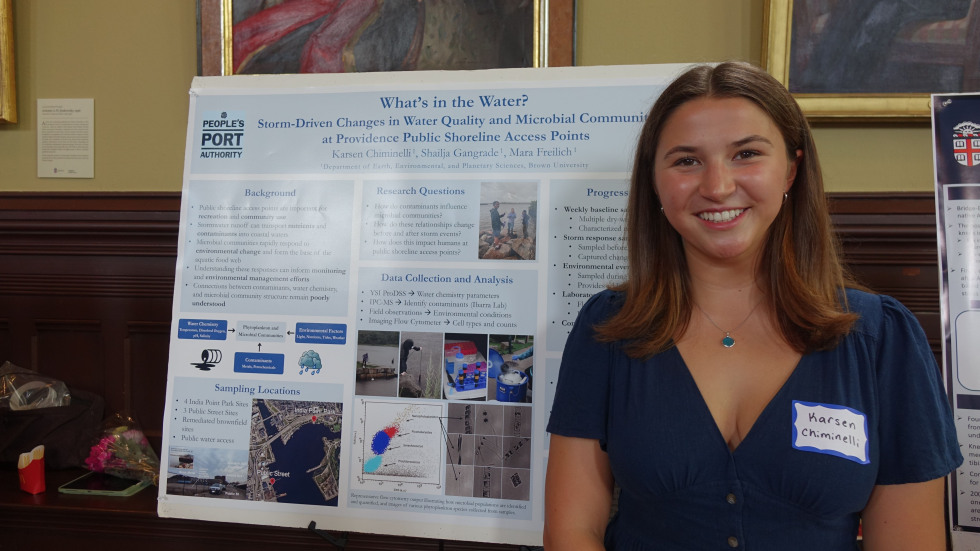
Karsen Chiminelli | Poster Presentation: "What’s in the Water? Investigating Storm-Driven Changes in Water Quality and Microbial Communities at Providence Public Shoreline Access Points" Advisor: Shailja Gangrade
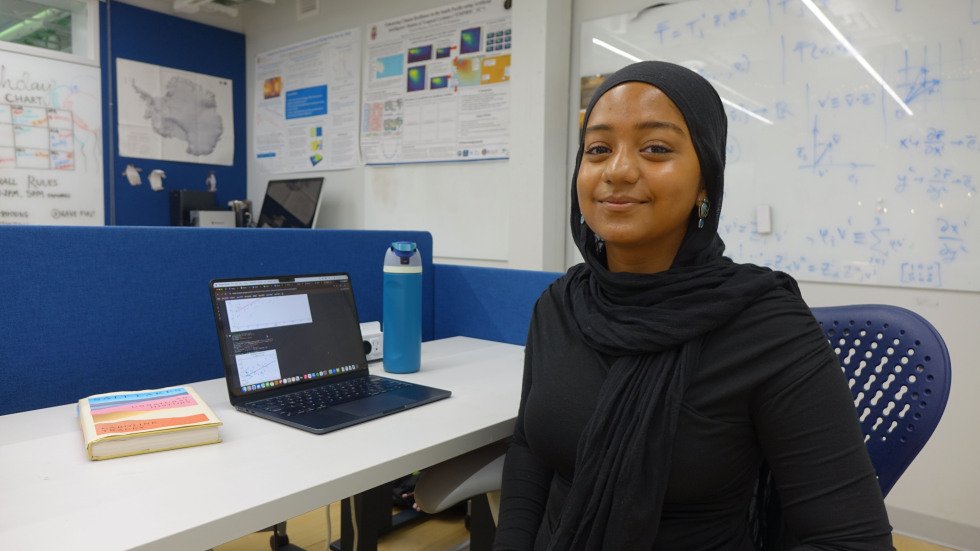
Maysha Chowdhury | Poster Presentation: “Whose Data Counts? Community-Powered Water Quality Monitoring for Environmental Justice and Water Governance” Advisor: Mara Freilich
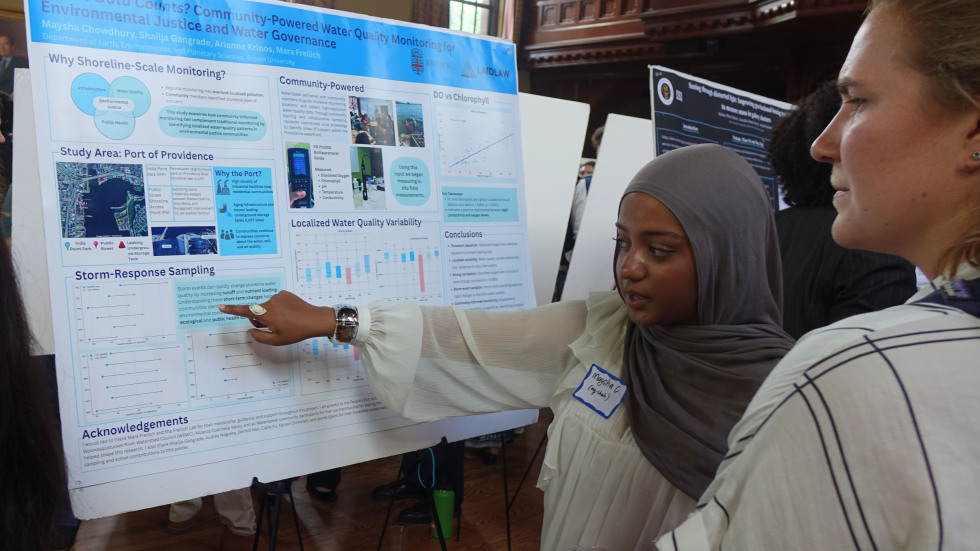
Maysha Chowdhury | Poster Presentation: “Whose Data Counts? Community-Powered Water Quality Monitoring for Environmental Justice and Water Governance” Advisor: Mara Freilich
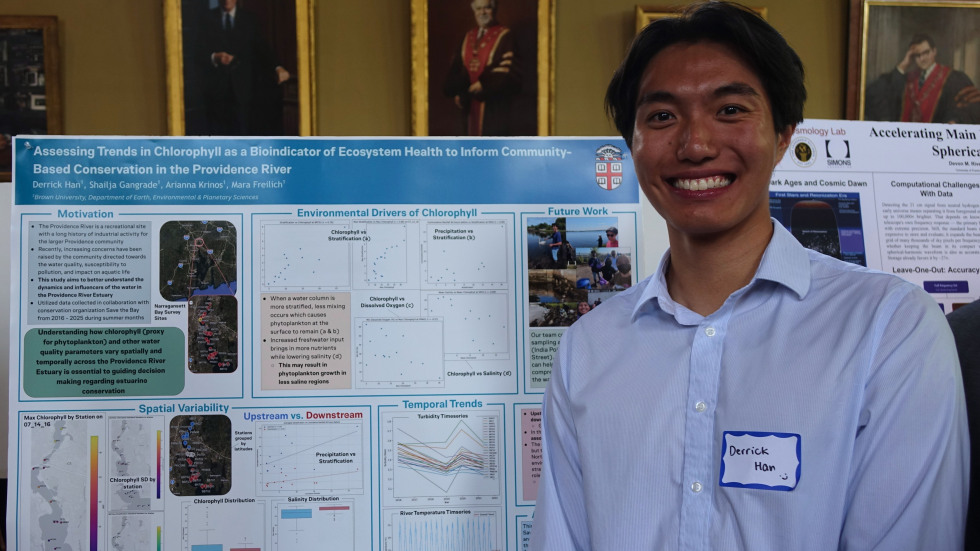
Derrick Han | Poster Presentation: "Assessing Trends in Chlorophyll as a Bioindicator of Ecosystem Health to Inform Community-Based Conservation in the Providence River" Advisor: Mara Freilich
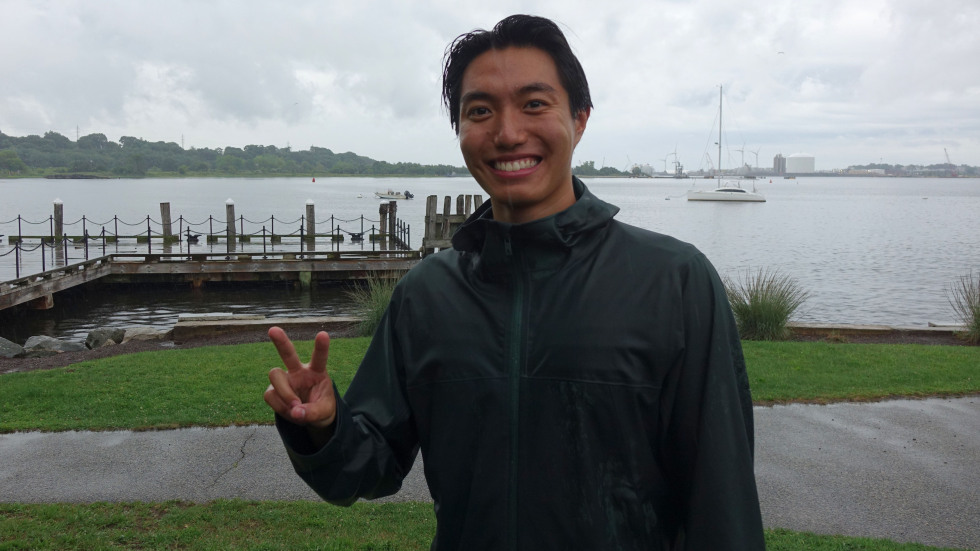
Derrick Han | Poster Presentation: "Assessing Trends in Chlorophyll as a Bioindicator of Ecosystem Health to Inform Community-Based Conservation in the Providence River" Advisor: Mara Freilich
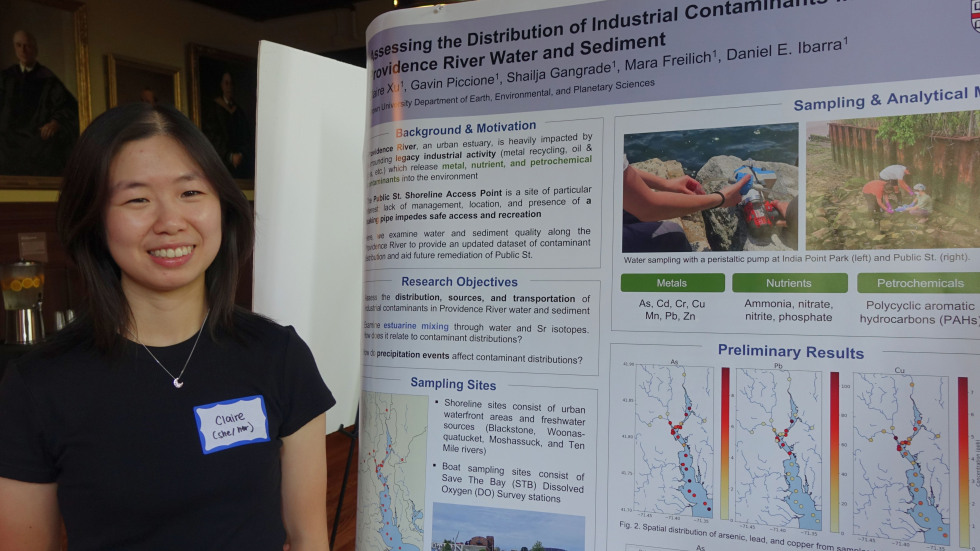
Claire Xu | Poster Presentation: "Assessing the Distribution of Industrial Contaminants in Providence River Water and Sediment" Advisors: Daniel Ibarra, and Mara Freilich
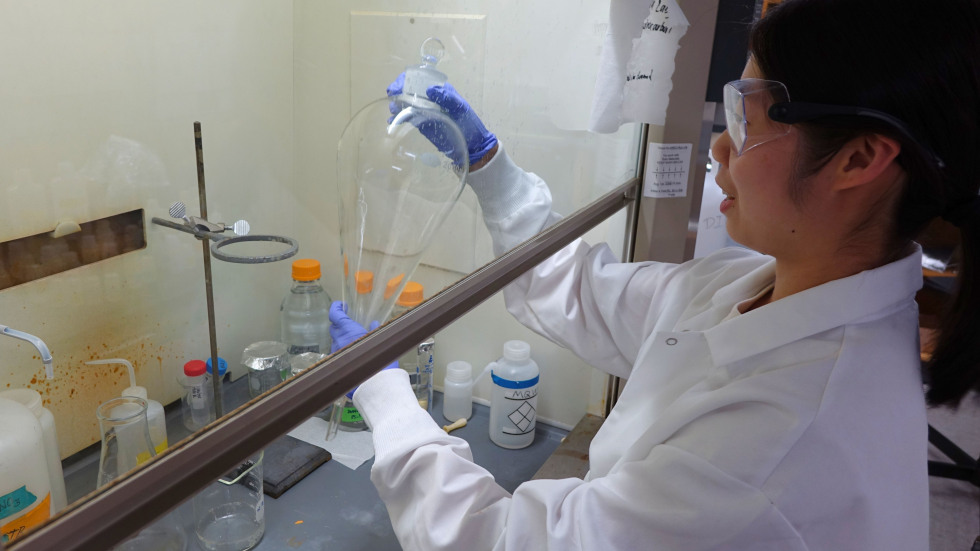
Claire Xu | Poster Presentation: "Assessing the Distribution of Industrial Contaminants in Providence River Water and Sediment" Advisors: Daniel Ibarra, and Mara Freilich
Hear from Shailja and the Equitable Climate Information Working Group
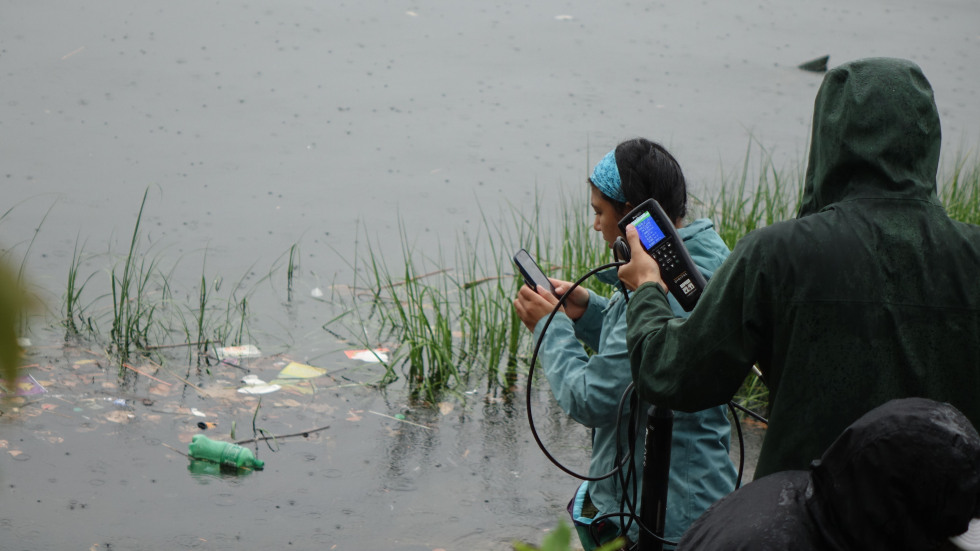
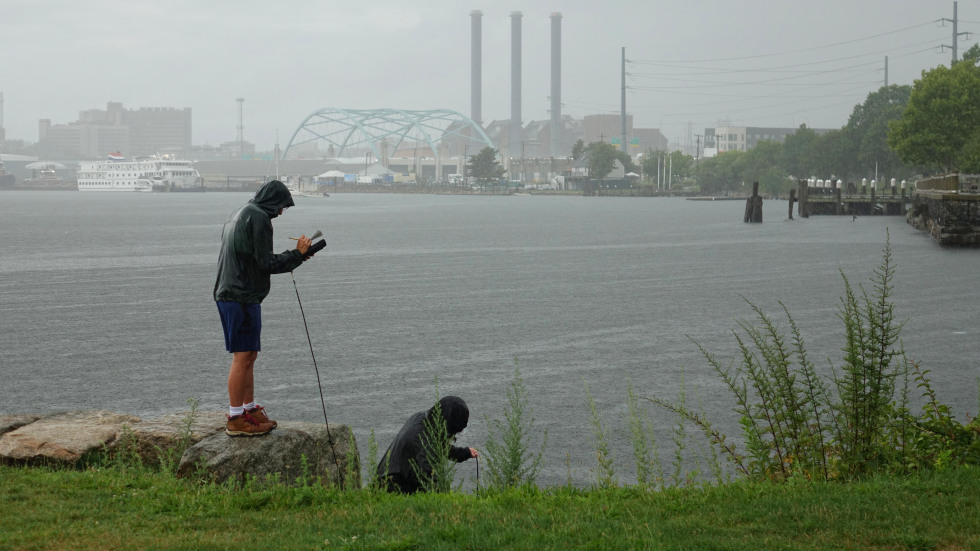
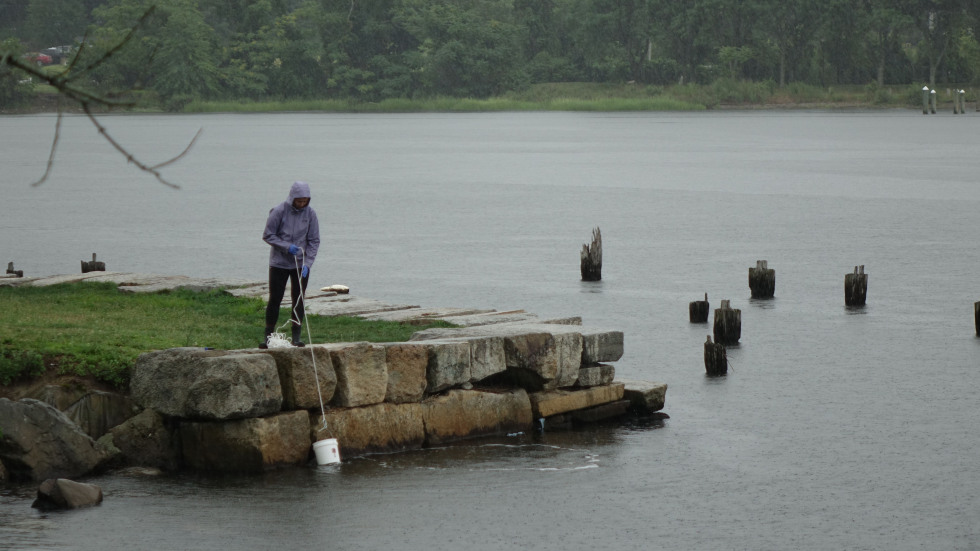
Postdoctoral Research Associate Shailja Gangrade filmed the following video of her and her student's sampling adventures in Providence's India Point Park, explaining their research methods and goals!
I am researching how storm events impact water quality and microbial communities at public shoreline access points in upper Narragansett Bay using flow cytometry and water quality measurements. I have enjoyed seeing how field sampling, laboratory analysis, and community partnerships come together to better understand coastal ecosystem health and support environmental stewardship.

I am examining the distribution, sources, and transport of industrial contaminants in the water and sediment of the Providence River. This urban estuary is heavily impacted by surrounding legacy industrial activity that poses health risks to local communities. Through weekly water sampling and geochemical analyses for metals, nutrients, petrochemicals, and various isotopes, I aim to provide an updated assessment of water and soil quality in this section of the upper Narragansett Bay and provide data to aid the remediation of the Public St Shoreline Access Point.
This summer, I had a lot of fun conducting fieldwork in collaboration with peers in the Ibarra and Freilich Labs. I am excited to continue my analyses, culminating in my senior thesis, and participate in community events such as Waterspeak to make my science accessible and bring about change to protect our communities and the environment.


LunaSCOPE
LunaSCOPE (Lunar Structure, COmposition and Processes for Exploration) is an international, multidisciplinary NASA SSERVI node lead by Brown University researchers working to advance our understanding of the Moon's origin, evolution and composition, while paving the way for future human exploration and utilization. Several students joined LunaSCOPE for their summer research this year.
This summer, I had the incredible opportunity to conduct geotechnical testing of lunar regolith simulants at the University of Central Florida’s Exolith Lab and NASA Kennedy Space Center’s Swamp Works through the LunaSCOPE undergraduate summer internship!
This research aims to expand our understanding of the lunar surface and support the development of NASA’s Moon Base. Throughout the internship, I learned from and worked alongside scientists and engineers in exploration science and experimental research at UCF, the Florida Space Institute, and as a Visiting Intern at NASA Kennedy Space Center Swamp Works' Granular Mechanics and Regolith Operations (GMRO) Laboratory. Along the way, I also had the opportunity to meet the Artemis II astronauts and even learned how to operate an excavator in a lunar regolith simulant!

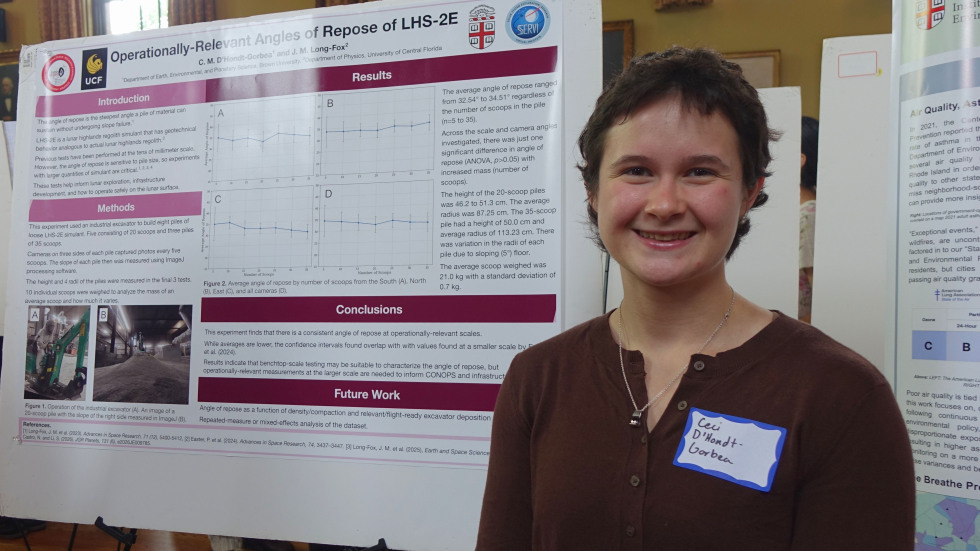
Cecilia D'Hondt-Gorbea | Poster Presentation: “Large Scale Angles of Repose of Lunar Highland Regolith Simulant” Advisor: Steve Parman

Cecilia D'Hondt-Gorbea with the Artemis II crew and other NASA team members.
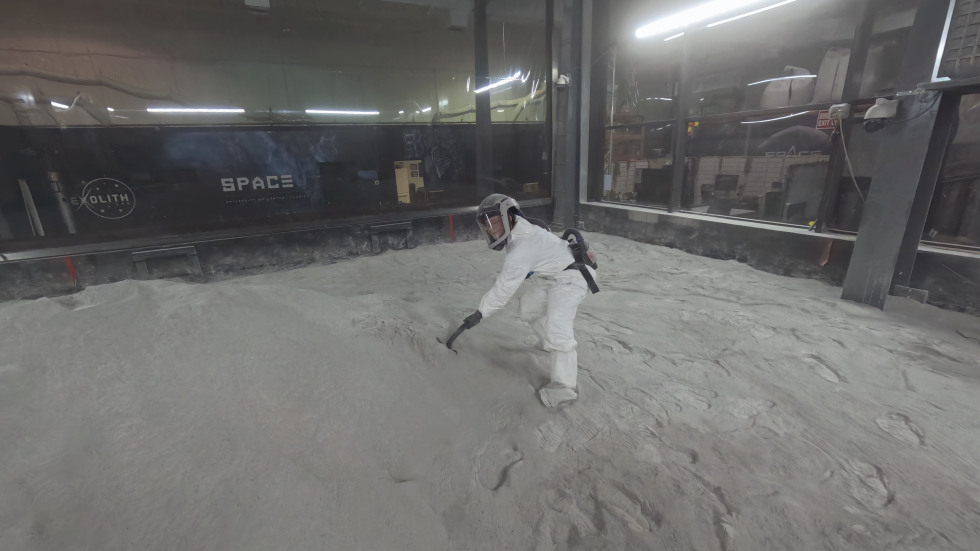
Cecilia D'Hondt-Gorbea conducting geotechnical testing of lunar regolith simulants at the University of Central Florida’s Exolith Lab and NASA Kennedy Space Center’s Swamp Works.
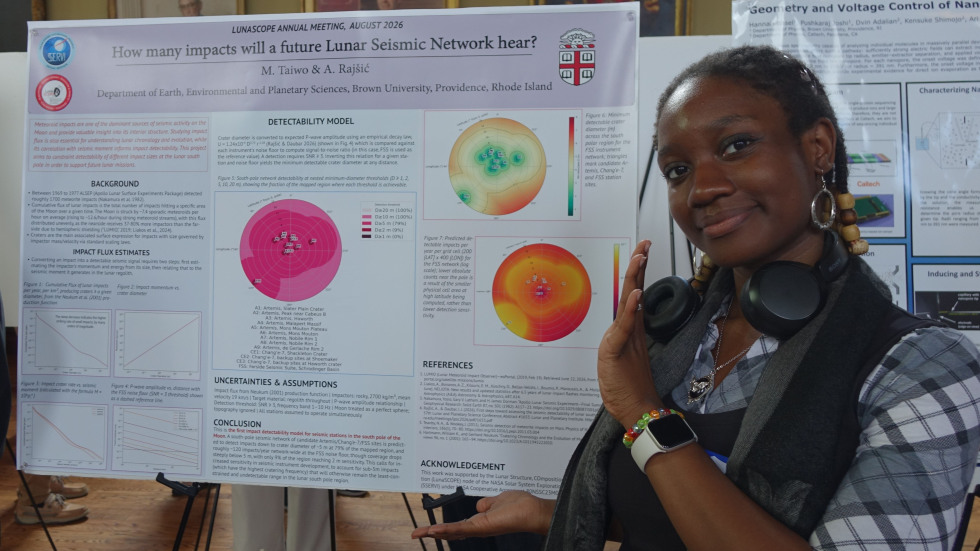
Mabel Taiwo | Poster Presentation: “Estimating Meteoroid Impact Detection Rates for a future Lunar Seismic Network” Advisor: Andrea Rajšić
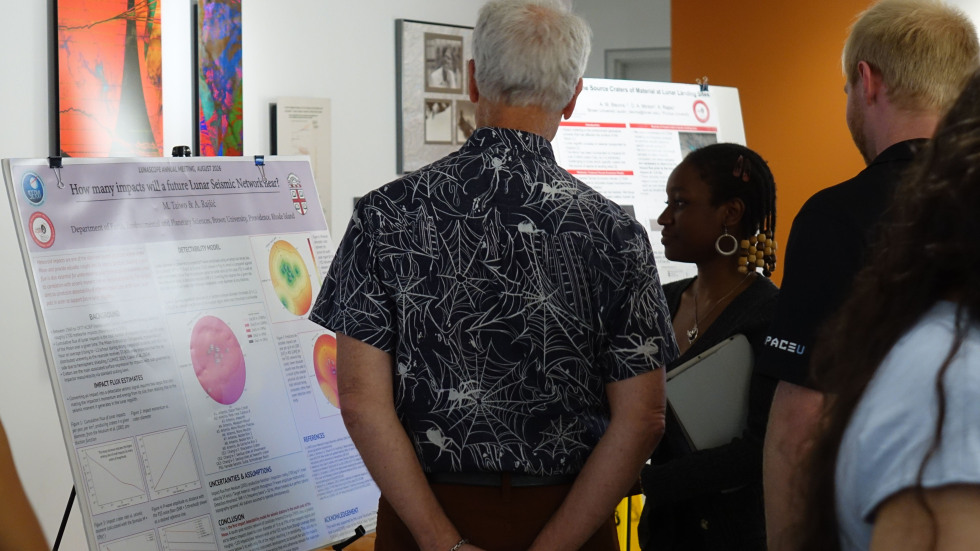
Mabel Taiwo | Poster Presentation: “Estimating Meteoroid Impact Detection Rates for a future Lunar Seismic Network” Advisor: Andrea Rajšić
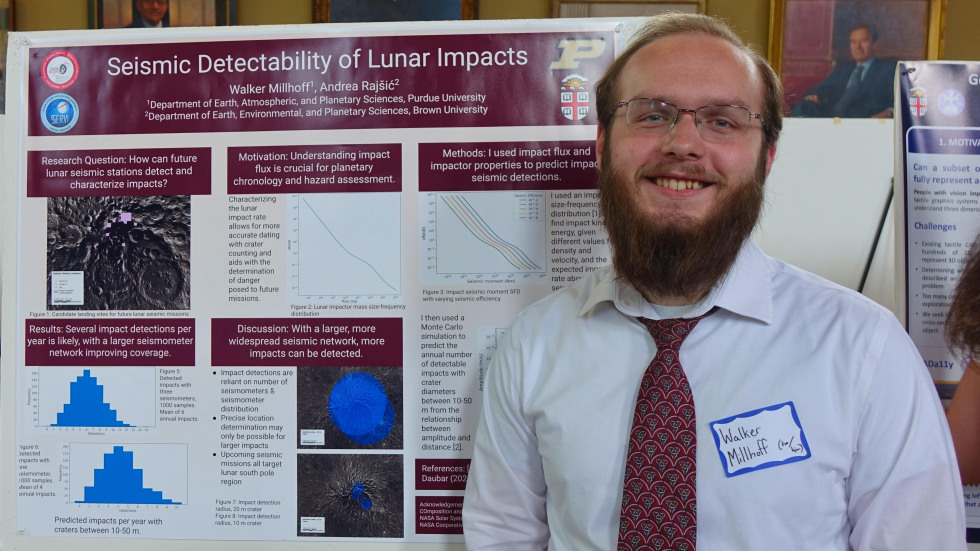
Walker Millhoff | Poster Presentation: “Characterization of the Seismic Detectability of Lunar Impacts” Visiting from Purdue; Advisor: Andrea Rajšić
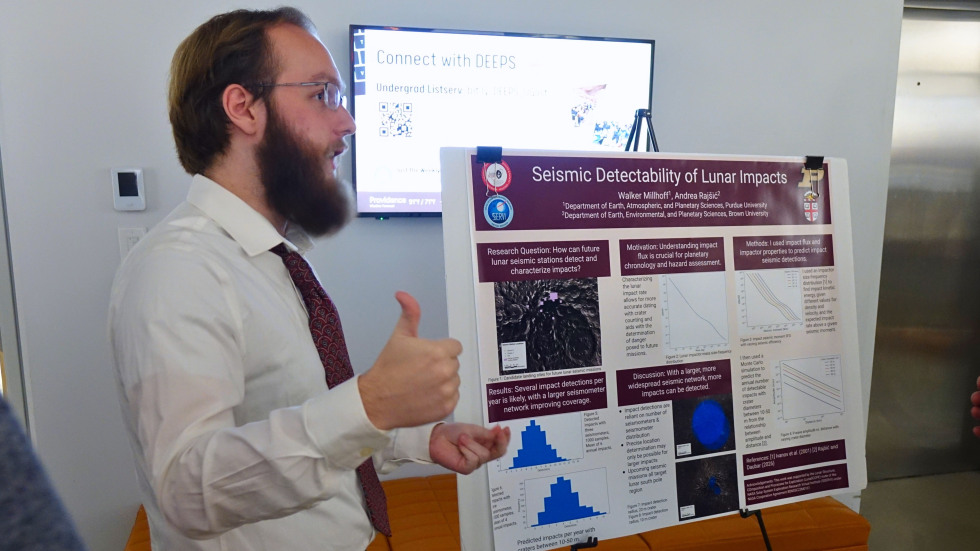
Walker Millhoff | Poster Presentation: “Characterization of the Seismic Detectability of Lunar Impacts” Visiting from Purdue; Advisor: Andrea Rajšić