Following two powerful earthquakes that recently shook northern Venezuela, rescue teams have been racing to pull survivors from the rubble. For those trapped, experts say that survival depends on many factors, including weather and access to water and air. DEEPS Professor Victor Tsai commented on the factors that affect earthquake survival, noting that trapped victims are more likely to survive if they're able to wait in a debris-free pocked, called a "survivable void space."
Read Article
Department of Earth, Environmental & Planetary Sciences
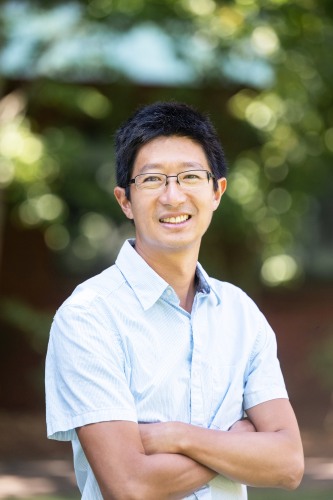
Victor Tsai
Professor
GeoChem Building
Room 162
Room 162
Research Interests
Oceans Ice and Atmospheres, Geophysics, Environmental Science
Pronouns
he/him
Biography
My research focuses on seismology and geomechanics, fluid-solid interactions in Earth systems, theoretical glaciology, and environmental seismology.
Recent News
NPR: Short Wave
An icy mystery: What are lake stars?
DEEPS Professor Victor Tsai spoke with NPR's Short Wave podcast about "lake stars," the dark spidery, star-shaped patterns that can form in ice, and how he became the first person to scientifically prove how they form. Plus, he explains how knowing more about lake stars can potentially give us clues about the presence of water on Europa, one of Jupiter's icy moons.
Read Article
Rescue teams in Myanmar and Thailand are searching for survivors after Friday’s 7.7 magnitude quake that toppled buildings and damaged roads on Sunday, March 30th. As rescue teams continue to search, experts share the factors that impact their chances for survival. Trapped victims are more likely to survive if they are in a debris-free pocket that prevents major injury while they await rescue, like under a sturdy desk, said Professor Victor Tsai in an email.
Read Article
Geologists generally think that creep happens on faults that slice through particularly slippery rocks. But a recent study co-authored by Professor Victor Tsai reports that the overall structure of a fault network might also dictate why some faults creep rather than intermittently slip dramatically.
Read Article
Findings published in Nature by a team of Brown-led researchers challenge traditional beliefs about the cause of earthquakes and suggest that it depends not on friction, but on the ways faults are aligned.
Read Article
Seismological Research Letters
The Future of Earth Imaging
Associate Professor Victor Tsai has published a new article in GeoScienceWorld's Seismological Research Letters about the challenges with available Earth imaging techniques, and explores opportunities for improvement.
Read Article