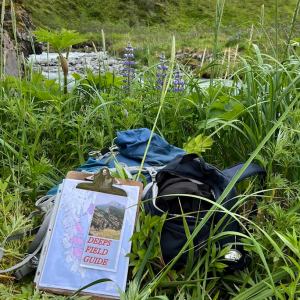
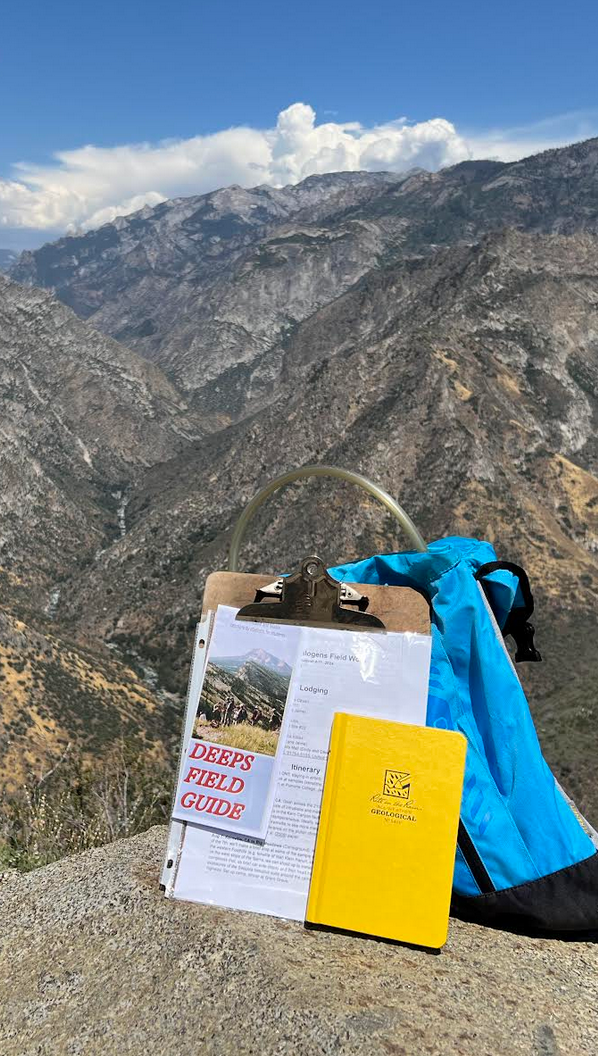
 Many DEEPS students cite field work as one of the most exciting parts of studying earth sciences. Whether it’s for a research project or on a class field trips, most geoscience students will venture into the field. To help make those adventures more accessible, especially for those new to field research, three DEEPS graduate students have created the Field Preparedness Guide, a fillable brochure and informative guide for undergraduate and graduate students venturing out of the lab or the classroom.
Ellen Jorgensen, Julia Miller, and Alexia Rojas first started working on the field guide as a project for the class “DEI in STEM,” taught by Dr. Emily Cooderdock in Spring 2024. They produced a Fillable Brochure, which can be easily updated and printed for students to bring into the field, as well as a detailed Field Guide reference document covering how to pack for the trip, how to take field notes, and more.
The team used personal experiences and existing literature to put together a comprehensive guide that would be useful to geoscience students across research disciplines. “While we won’t always have control over how a field campaign is led,” the group shared via email, “and we can’t always know ahead of time what obstacles might be faced, we wanted to help students prepare for the scenarios that they might reasonably face.”
The team described how stepping out of the structured classroom environment can result in unexpected obstacles for many students. Those with little to no experience in camping or spending time outdoors may struggle to have a level of comfort in the field that is conducive to learning and research.
“I myself had never been camping before starting a geoscience PhD. I was really lucky to do some of my first real fieldwork with other students who helped me to feel not just safe but more comfortable in the field, and I’m glad for the opportunity to pass on some of that knowledge,” says Julia.
Overall, the aim of the project is to bridge this gap in preparedness, so that fieldwork can be safe, productive, and fun for everyone involved. “As a field geologist, I wish I had access to a guide like this before my first field experiences. It not only provides practical preparation tools, but also makes the ‘hidden curriculum’ of field science transparent,” Alexia shared.
“I’m really excited for any students or researchers heading into the field for the first time. I hope that this guide can help folks from every background feel prepared and excited to head out and learn!” says Ellen.
Photos of the Field Guide brochure out in the field are provided by Assistant Professor Emily Cooperdock, taken in 2024 in Kings Canyon NP, CA, and Unalaska, AK.